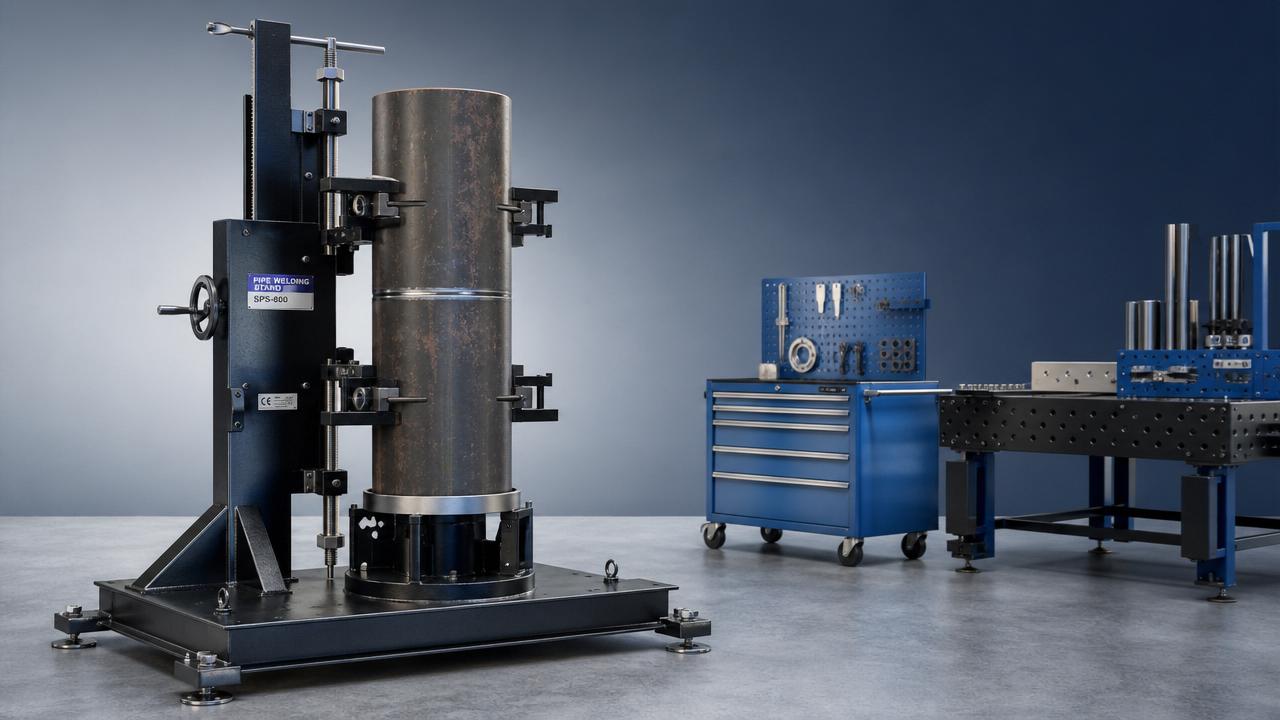
Vertical welding stand setup can look straightforward, but small oversights often lead to major safety and quality issues. Is a pipe welding stand safe for vertical welding? The answer depends on load balance, clamping stability, base strength, and operator positioning. Understanding these commonly missed risks helps fabricators prevent tipping, misalignment, weld defects, and unnecessary downtime before work even begins.
Is a Pipe Welding Stand Safe for Vertical Welding?
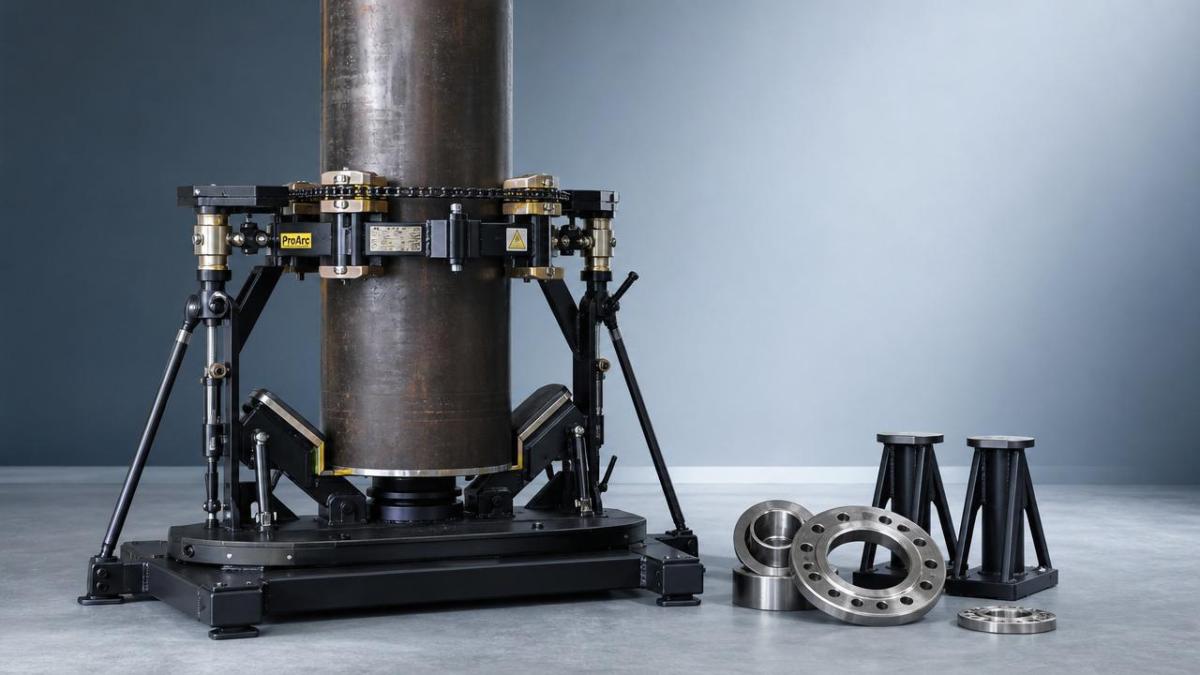
Yes, a pipe welding stand can be safe for vertical welding, but only when the setup matches the real load, welding position, and workpiece dimensions.
Many accidents and quality failures happen not because the stand is defective, but because the setup ignores center of gravity, pipe overhang, clamp fit, or floor conditions.
For fabricators, supervisors, and workshop buyers, the practical question is not whether a stand is safe in theory. It is whether this exact setup is stable today.
That means checking load path, stand rating, locking condition, pipe support angle, and operator access before the first arc is struck.
Why Vertical Welding Creates More Risk Than Many Shops Expect
Vertical welding changes how force moves through the workpiece and support equipment. The pipe is not only heavy, but also harder to stabilize during fit-up and welding.
In a flat setup, weight usually pushes more directly downward into the stand. In vertical or near-vertical positioning, side load and imbalance become much more important.
Even a small offset in pipe position can create leverage that increases tipping risk. That is one reason missed setup details become serious problems very quickly.
Heat input also affects the situation. As metal expands, the pipe may shift slightly, clamps can loosen, and alignment can move out of tolerance.
Because vertical welds demand more control from the welder, poor stand setup also increases fatigue. That leads to uneven travel speed, poor bead consistency, and rework.
Which Risks Are Most Often Missed in Vertical Welding Stand Setup?
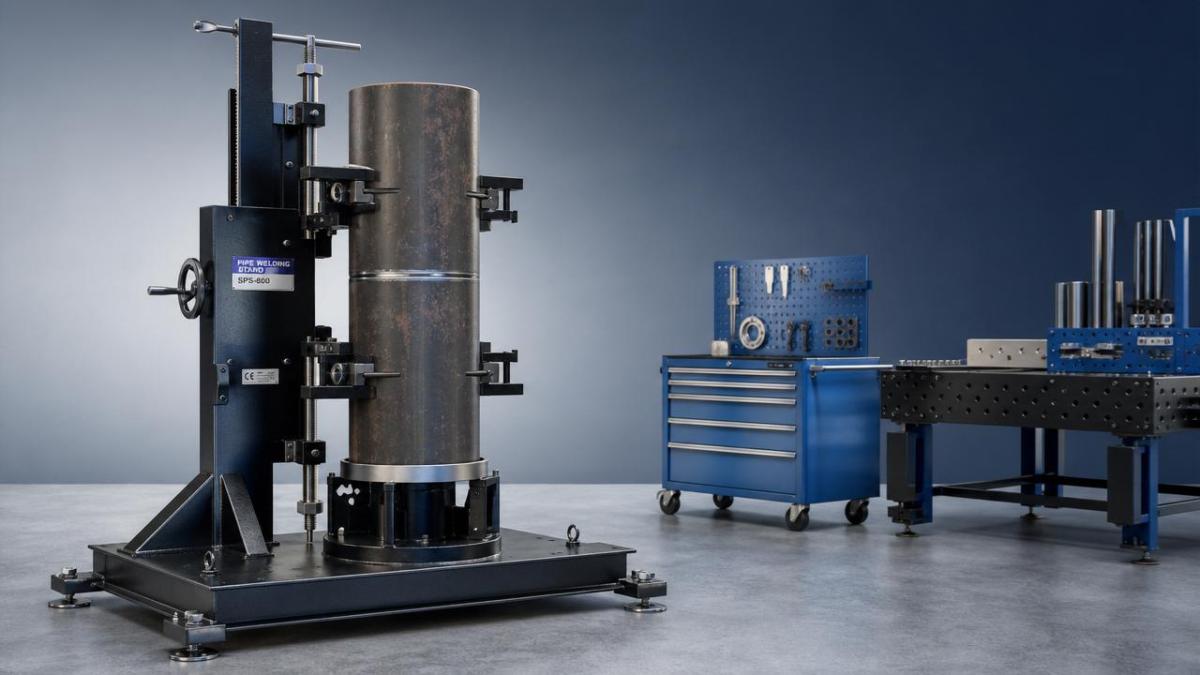
The most commonly missed risks are not always dramatic at first glance. They are usually basic setup errors that seem minor until they affect safety or weld quality.
One major issue is underestimating the true load. Shops may calculate only the pipe weight, but forget fixtures, elbows, flanges, tack assemblies, or temporary attachments.
Another overlooked risk is center-of-gravity shift. A stand may hold the total weight, yet still become unstable if the load is unevenly distributed above or beside the support point.
Clamp mismatch is also common. Using the wrong top attachment, worn rollers, or poorly fitted pipe heads can allow creeping, rotation, or sudden movement during welding.
Floor condition is another hidden problem. A stand placed on uneven concrete, debris, steel offcuts, or expansion joints can lose stability even when the frame itself is strong.
Some teams also forget to account for dynamic force. Workers pushing, repositioning, or striking the pipe during fit-up can create momentary loads much higher than static weight.
Finally, operator position is often ignored. If the welder has to lean, reach, or work around an awkward angle, both safety and weld consistency decline.
How Load Balance and Center of Gravity Affect Stand Safety
Load balance is one of the most important checks in vertical welding, yet it is often handled by visual guesswork instead of a structured review.
If the pipe’s center of gravity sits too far from the stand’s support line, the setup may feel stable at rest but become dangerous during adjustment or welding.
This is especially true for long pipe sections, heavy wall materials, or assemblies with valves and flanges concentrated on one side. Uneven mass creates overturning force.
A common mistake is using too few support points. When the spacing between stands is too wide, the pipe can sag, bounce, or transfer excess stress into one location.
For vertical work, support height also matters. The higher the load is raised, the greater the effect of small shifts in balance and the more serious a tip can become.
Good practice includes verifying the load rating, measuring pipe length and weight, checking attachment weight, and confirming the support arrangement before welding starts.
Why Clamping Stability Matters as Much as Stand Capacity
Many buyers focus on rated load capacity, but capacity alone does not guarantee safe use. A strong stand still fails if the pipe is not restrained correctly.
In vertical welding, clamping must resist sliding, rolling, and vibration. If the contact area is too small or the fit is poor, the pipe can move unexpectedly.
Worn clamp surfaces are a frequent source of trouble. They may still appear usable, but reduced friction and uneven contact can weaken holding force under heat and motion.
Improvised solutions create further risk. Blocking a pipe with scrap metal or forcing a mismatched head into place may save time initially, but often causes instability later.
Clamping should also support alignment accuracy. If the pipe shifts during tack welding, the welder may compensate manually, which raises defect risk and wastes production time.
When evaluating safety, shops should ask not only, “Can this stand hold the pipe?” but also, “Can it hold the pipe in the exact position we need?”
How Base Strength and Floor Conditions Influence Real-World Stability
Base strength is frequently misunderstood as a factory specification only. In reality, overall stability depends on both the stand design and the surface beneath it.
A rated stand placed on weak flooring, sloped concrete, or contaminated surfaces does not perform like it does in a catalog. Real conditions change the outcome.
Vertical welding increases sensitivity to these conditions because the load often sits higher and creates more leverage. That magnifies the effect of slight rocking or tilting.
Shops should inspect for oil, dust, weld spatter, water, and loose debris before setup. These small issues can reduce friction and allow the stand feet to shift.
It is also important to confirm whether casters, leveling feet, or locking mechanisms are fully engaged. A missed lock pin can turn a normal operation into a serious incident.
Where heavier assemblies are involved, some facilities benefit from marked setup zones with known floor quality, load limits, and enough clearance for welding access.
What Setup Mistakes Lead to Weld Defects, Not Just Safety Incidents?
Unsafe setup does not always cause an immediate accident. In many cases, the first visible result is poor weld quality, followed later by rework, delay, and extra cost.
If the pipe moves slightly during vertical welding, root alignment can change. That may lead to inconsistent penetration, poor fusion, undercut, or uneven bead profile.
Instability also affects welder control. When the operator is bracing against movement or reaching around a poorly supported joint, travel angle and arc length become harder to maintain.
Vibration from loose supports can make precision more difficult, particularly on thinner wall pipe or applications with stricter inspection requirements.
Misalignment from weak support may remain hidden until fit-up progresses to the next section. At that point, correction is more expensive and may disrupt the whole fabrication sequence.
For production managers, this is the key business point: bad stand setup is not only a safety problem. It is also a repeatable source of scrap, delay, and labor loss.
How to Check Whether Your Vertical Welding Stand Setup Is Actually Safe
A reliable evaluation process should be simple enough to use every day, but detailed enough to catch risks before lifting, fitting, and welding begin.
Start with the load. Confirm the actual weight of the pipe, fittings, and accessories, then compare that total to the stand rating with a reasonable safety margin.
Next, check support geometry. Make sure the number of stands, spacing, and height fit the pipe length and shape, especially if one end carries added components.
Inspect all contact points. Rollers, V-heads, clamps, pins, and locking parts should be clean, undamaged, and appropriate for the pipe diameter and surface condition.
Then examine the base and floor. Confirm that the stand sits flat, the area is clear, and no hidden slope or contamination can reduce stability.
Finally, review operator access. The welder should be able to maintain position, visibility, and torch control without twisting awkwardly or pushing against the workpiece.
If any of these points are uncertain, the safest decision is to stop and adjust the setup before continuing. Small corrections early prevent larger failures later.
What Buyers and Workshop Managers Should Look for in a Better Welding Stand
If your team regularly performs vertical welding, equipment selection should reflect that reality. A basic stand may work for light support, but not for demanding production conditions.
Look for clear load ratings, stable base design, reliable locking features, and support heads suited to the pipe sizes your shop handles most often.
Durability matters as well. Heavy-duty rollers, stronger pins, better welds on the frame, and predictable adjustment mechanisms reduce maintenance issues and unplanned downtime.
Ease of positioning is also valuable. If workers can set height and support angle quickly and securely, the chance of unsafe improvisation drops significantly.
For managers, the return on investment is not only equipment life. It also includes fewer incidents, better weld consistency, lower rework, and smoother workflow on the shop floor.
In other words, choosing the right stand is part of process control. It supports safety, productivity, and quality at the same time.
Conclusion
So, is a pipe welding stand safe for vertical welding? Yes, but only when the full setup is engineered and checked with real working conditions in mind.
The risks most often missed are load imbalance, shifting center of gravity, weak clamping, unstable floor contact, and poor operator positioning. These issues affect both safety and weld quality.
Shops that treat stand setup as a critical part of fabrication, rather than a simple accessory decision, reduce downtime, prevent defects, and create safer working conditions.
Before every vertical weld, the best question is not whether the stand looks strong enough. It is whether the entire support system is stable, controlled, and fit for that exact job.
Leave A Message
If you are interested in our products and want to know more details, please leave a message here, we will reply you as soon as we can.