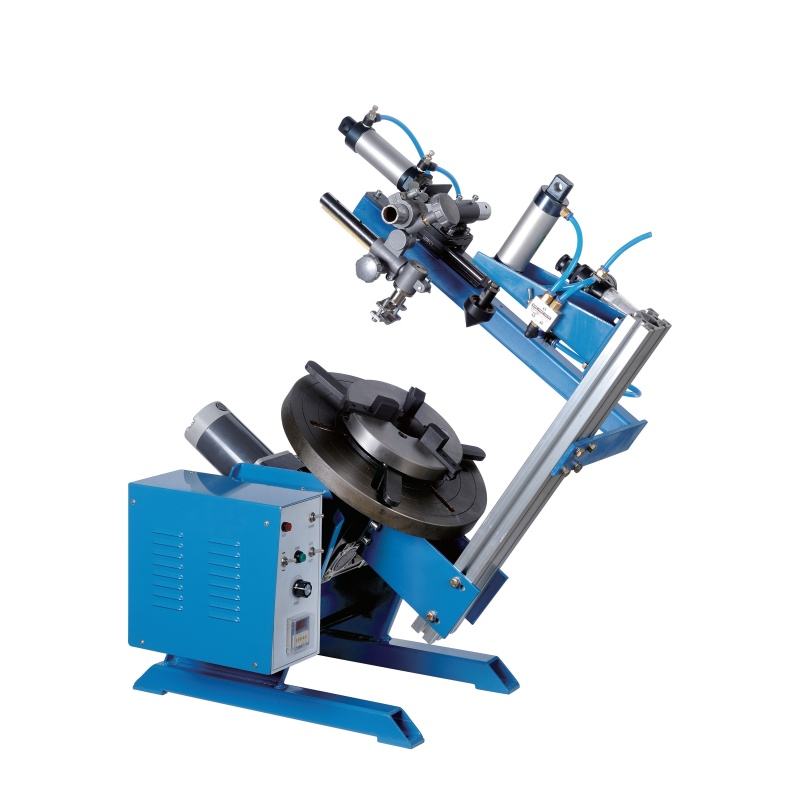
Lubrication is one of the most overlooked factors in welding positioner performance, yet it directly affects rotation accuracy, load stability, and equipment lifespan. If you want to understand How to maintain a welding positioner to extend life, proper lubrication is the first place to start. In this article, we’ll explain how insufficient lubrication causes wear, overheating, and costly downtime in welding operations.
For fabrication shops, pressure vessel manufacturers, pipe welding contractors, and heavy steel processors, a welding positioner is not just a rotating table. It is a load-bearing motion system that must hold torque, align the weld seam, and keep movement smooth under repeated duty cycles. When lubrication is neglected, even a well-built unit can lose accuracy faster than most buyers expect.
This matters in B2B production environments where 8-hour, 16-hour, or even 24-hour operating schedules are common. A dry gearbox, under-greased bearing, or contaminated lubrication path can turn a stable welding setup into a source of vibration, uneven rotation, rework, and unplanned maintenance. Understanding the failure chain helps maintenance teams prevent higher repair costs later.
How Lubrication Supports Core Welding Positioner Functions
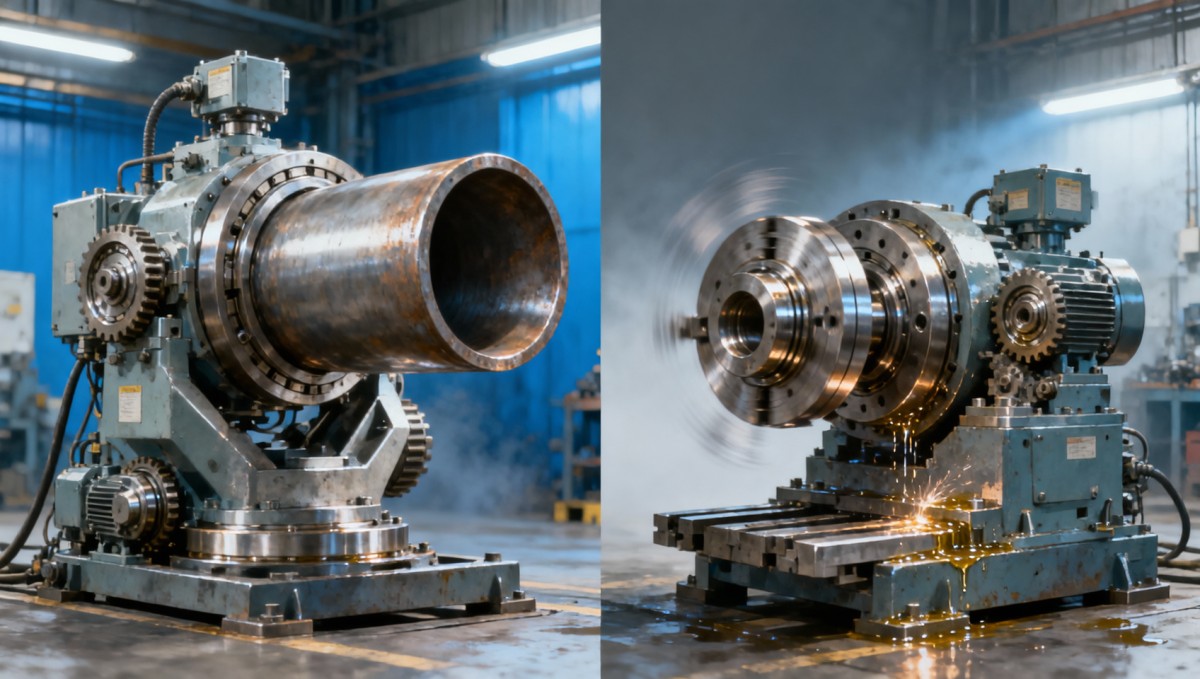
A welding positioner typically includes a rotation drive, bearings, gearbox, slewing support or turntable mechanism, and in many cases a tilt assembly. These moving parts transfer load continuously. Lubrication creates a protective film between metal surfaces, reducing direct contact and helping components operate within a stable friction range. Without that film, wear accelerates from the first hour of use.
In practical terms, proper lubrication affects 4 critical areas: rotation smoothness, positioning accuracy, temperature control, and service life. For example, when a table carries 500 kg, 2 tons, or 10 tons, the load on bearings and gear teeth rises sharply during start-stop motion. A correctly selected grease or gear oil helps distribute pressure and reduces micro-scoring under these intermittent shock loads.
Lubrication also supports weld quality indirectly. If the positioner rotates unevenly, the torch angle and joint presentation change during welding. That can lead to inconsistent bead profile, unstable penetration, or more spatter. In automated or semi-automated welding, even a small increase in backlash or drag can affect cycle stability over long runs.
Why friction control matters in rotating equipment
Metal-to-metal contact produces heat, abrasive particles, and surface fatigue. In welding positioners, this process is often gradual rather than dramatic. Operators may first notice slower acceleration, higher motor load, or a slight jerking motion. By the time noise becomes obvious, internal surfaces may already have measurable wear.
A good maintenance program usually checks lubrication condition every 250 to 500 operating hours, depending on workload, ambient dust, and heat exposure. High-duty applications with large eccentric loads often require shorter intervals than light assembly welding. Shops working near grinding stations or flux residue should inspect more frequently because contamination can degrade grease performance quickly.
Key functions of lubrication in a welding positioner
- Reduces friction between bearings, gears, and rotating support components.
- Helps carry heat away from loaded contact points during repeated motion.
- Protects surfaces against corrosion in humid, dusty, or fume-heavy workshops.
- Limits vibration and noise that can affect weld consistency and operator confidence.
The table below shows how lubrication connects directly to common performance metrics in welding equipment selection and maintenance planning.
The main takeaway is simple: lubrication is not a secondary detail. It is a basic operating condition for any welding positioner expected to deliver stable motion over hundreds of cycles per week.
What Happens When a Welding Positioner Runs with Poor Lubrication
Damage from insufficient lubrication usually appears in stages. Stage 1 is increased friction, which raises operating temperature and slightly increases motor current. Stage 2 is surface wear in gears and bearings, often seen as fine metallic particles in old grease or oil. Stage 3 involves performance loss: noise, vibration, backlash, and unstable load handling. If ignored, Stage 4 becomes component failure and downtime.
Overheating is one of the most common consequences. When lubrication film thickness drops below what the contact surfaces need, heat builds up faster than the assembly can dissipate it. In enclosed drive systems, temperature rise of 10°C to 20°C above normal operating condition can shorten lubricant life significantly and accelerate oxidation. That creates a cycle where degraded lubricant causes even more heat.
Wear does not only reduce lifespan; it also changes machine behavior. A bearing with excess internal damage may still rotate, but not precisely. A gear set with pitting may still transmit torque, but with more backlash and more noise. In welding applications, these seemingly minor issues can affect fixture repeatability and weld presentation, especially on circular seams, pipe joints, or long cylindrical workpieces.
Common failure modes linked to lubrication neglect
The risk becomes higher when a positioner is loaded near 70% to 90% of rated capacity on a regular basis, or when the workpiece center of gravity is offset. Eccentric loading places uneven stress on drive and support components. In those conditions, lubrication quality matters even more because contact pressure is not distributed evenly across the rotation system.
- Bearing scoring caused by dry running or contaminated grease.
- Gear tooth pitting from thin or degraded oil film.
- Seal damage after heat buildup and hardened grease deposits.
- Motor overload due to increased rotational resistance.
- Reduced rotation accuracy in automated welding sequences.
Early warning signs maintenance teams should not ignore
A welding positioner rarely fails without warning. In many shops, 5 signs appear first: unusual noise, hotter bearing housings, inconsistent rotation speed, grease leakage mixed with fine metal dust, and increasing vibration under load. Responding during this window is far less expensive than replacing a gearbox or major support bearing later.
The table below outlines how lubrication-related faults progress and what operators should check before the damage becomes severe.
This progression explains why lubrication should be treated as a reliability issue, not just a maintenance detail. Once wear starts, relubrication can slow damage, but it may not restore original accuracy if surfaces are already worn.
High-Risk Operating Conditions That Accelerate Lubrication Failure
Not all welding environments place the same demand on a positioner. A lightly loaded unit used 2 or 3 hours per day in a clean fabrication cell may maintain lubricant quality longer than a heavy-duty machine running two shifts near grinding dust, weld spatter, and heat. Maintenance intervals should reflect the real environment, not just the manual’s basic recommendation.
Several conditions accelerate lubricant breakdown. High ambient temperature reduces viscosity stability. Frequent starts and stops increase shock loading. Large diameter workpieces with offset mass create side loading. Dust and metallic fines entering seals contaminate grease. In some shops, operators wash equipment aggressively, allowing moisture intrusion that weakens lubrication and promotes corrosion.
Positioners used for pipe spools, tank sections, flanges, and structural assemblies often face variable load profiles. One day the machine may hold a compact 300 kg part, and the next day an unbalanced 1.5-ton weldment. Without adjusting inspection frequency, lubrication problems stay hidden until the machine begins to lose smooth torque output.
Operating scenarios that need shorter lubrication intervals
As a practical rule, maintenance teams should shorten inspection cycles by 25% to 50% under severe service conditions. That does not always mean complete lubricant replacement each time. It may mean more frequent visual checks, temperature checks, grease condition review, and seal inspection before contamination reaches internal components.
Typical high-risk conditions
- Duty cycle above 60% of the shift, especially during repetitive circumferential welding.
- Loads above 75% of rated capacity or with eccentric center of gravity.
- Workshop temperature regularly above 35°C or with strong radiant heat nearby.
- Dust, grinding particles, weld spatter, or moisture exposure around seals and drive assemblies.
The following comparison helps production managers judge whether their application calls for standard or intensified lubrication control.
Many failures blamed on “poor machine quality” actually begin with a mismatch between operating conditions and lubrication practice. Reviewing that match is often the fastest way to reduce downtime without replacing the entire positioner.
How to Build an Effective Lubrication Maintenance Plan
A useful lubrication plan should be simple enough for technicians to follow and detailed enough to prevent missed points. The most effective programs define 5 items clearly: component location, lubricant type, application quantity, maintenance interval, and inspection record. Without documentation, even experienced teams may over-grease one point and neglect another.
Start by identifying every lubrication point in the welding positioner: main bearings, gearbox, tilt pivots, worm gear assemblies if applicable, and auxiliary rotating supports. Then separate them by lubricant type. Grease and gear oil are not interchangeable. Using the wrong consistency or viscosity can be almost as harmful as using too little lubricant.
Inspection should combine visual and operational checks. Look for leaks, hardened deposits, discolored grease, contamination, and damaged seals. During operation, listen for abnormal noise, check smoothness at low and normal speed, and monitor surface temperature. A maintenance log taken every 1 to 4 weeks provides trend data that helps teams act before damage spreads.
Recommended maintenance workflow
- Clean accessible lubrication points before adding new grease to reduce contamination entry.
- Confirm the correct lubricant grade specified for the drive and support components.
- Apply the proper amount gradually; excessive grease can increase heat and seal pressure.
- Run the machine at low speed for several minutes and check for abnormal sound or drag.
- Record date, operating hours, condition observed, and the next due inspection point.
What buyers and plant managers should ask suppliers
When evaluating a welding positioner, buyers should not only compare load rating and table diameter. They should also ask about lubrication access, seal design, gearbox serviceability, and spare parts support. A machine that is easier to maintain often has lower total ownership cost over 3 to 5 years, even if the initial purchase price is slightly higher.
Questions worth asking include whether lubrication points are externally accessible, whether service intervals are practical for your shift pattern, and whether maintenance instructions include temperature or wear indicators. These details matter to manufacturers running continuous production rather than occasional welding jobs.
Common Lubrication Mistakes and How to Avoid Costly Downtime
One of the biggest mistakes is assuming that “more grease is better.” Over-lubrication can churn grease, raise temperature, stress seals, and push contaminants deeper into sensitive areas. Another common issue is extending service intervals simply because the positioner still rotates. Function does not always mean healthy condition, especially in the early stages of wear.
A second mistake is ignoring load pattern changes. If a workshop starts using the same positioner for larger or more eccentric weldments, the old lubrication interval may no longer be sufficient. Shops often change production mix faster than they update maintenance schedules. That gap is where many drive and bearing failures begin.
A third issue is poor contamination control. Grease guns, open containers, and dirty fittings can introduce particles directly into the lubrication system. In welding equipment, metallic dust and spatter residue are especially harmful because they act like abrasive media. Clean handling practices are low-cost, but they have a major impact on equipment reliability.
Mistakes that shorten welding positioner life
- Using one lubricant for all components without checking compatibility.
- Skipping checks because no visible leak is present.
- Relubricating without cleaning fittings and surrounding surfaces.
- Failing to inspect after overload events or emergency stops.
- Not tracking hours, which makes preventive maintenance inconsistent.
FAQ for maintenance and purchasing teams
How often should a welding positioner be lubricated?
There is no single answer for every machine, but many industrial setups review lubrication every 250 to 500 operating hours. Heavy-duty, high-heat, or dusty applications may need shorter inspection intervals, sometimes weekly in continuous service environments.
Can poor lubrication affect weld quality directly?
Yes. Uneven rotation, vibration, and backlash can change workpiece presentation during welding. This is especially important in circular seams, automated torch travel, and jobs requiring repeatable positioning accuracy across multiple parts.
What should be checked before buying a new positioner for heavy workpieces?
Check rated load, eccentric load allowance, bearing and drive design, lubrication access, maintenance interval, spare parts availability, and service documentation. For 2-ton to 10-ton applications, maintenance access becomes a major ownership factor.
Is noise always a lubrication problem?
Not always, but it is one of the first areas to inspect. Noise can also come from wear, misalignment, overload, or damaged gears. Lubrication condition should be checked early because it is often the easiest root cause to confirm or eliminate.
Lack of lubrication damages welding positioners by increasing friction, raising operating temperature, accelerating bearing and gear wear, and reducing the smooth, accurate motion that welding production depends on. In real workshop conditions, the cost is rarely limited to parts alone; it often includes downtime, rework, unstable weld quality, and shorter equipment life.
If you are selecting, operating, or servicing welding positioners, a disciplined lubrication program should be part of your standard equipment strategy. Better maintenance planning, proper lubricant selection, and earlier inspection under heavy-duty conditions can protect both machine performance and production output. To review the right solution for your application, contact us to discuss product details, maintenance recommendations, or a customized welding positioner plan.
Leave A Message
If you are interested in our products and want to know more details, please leave a message here, we will reply you as soon as we can.